
In the e2W category, which accounts for more than 60 per cent of total EV sales, volumes fell 15 per cent to 118,944 units in November, compared to 139,787 units in the previous month

The Ministry of Heavy Industries (MHI) has debarred Hero Electric and Benling India, two defaulters under its flagship Faster Adoption and Manufacturing of Electric Vehicles in India Phase-II (FAME-II) scheme, from participating in any of its incentive programmes in future. This action follows the ministry's findings that the phased manufacturing programme (PMP) guidelines were violated by these two companies, senior officials told
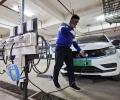
Electric vehicle sales registered a 55.2 per cent on-year growth at 1,79,038 units in July driven by a massive 96 per cent jump in e-two-wheeler sales, automobile dealers' body FADA said on Tuesday. The total electric vehicles sales for July 2023 were at 1,16,221 units, according to the monthly sales data from Federation of Automobile Dealers' Association (FADA).
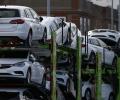
The production-linked incentive (PLI) scheme for the automobile sector has created market distortions, excluded innovation-led electric two-wheeler (e2w) makers, and failed to convert cost advantages into export competitiveness, with 77 per cent of export volumes driven by non-PLI models, said a report released by the Centre for Domestic Economy Policy Research (C-DEP) on Friday.
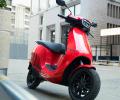
Ola Electric, India's largest electric vehicle company, has achieved a significant milestone by becoming the first two-wheeler automotive electric vehicle (EV) manufacturer in India to receive incentives under the Production Linked Incentive (PLI) Scheme for Automotive and Auto Component (PLI-Auto Scheme). The company has been granted a total incentive of Rs 73.74 crore for the Determined Sales Value of FY 2023-24 under the scheme, according to a stock exchange filing by the company.
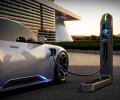
Manufacturers of electric vehicles (EVs) have been lukewarm to the ad hoc subsidy scheme announced by the Centre for them. Sector majors have not been enthused by the lower level of incentives in the scheme, which has replaced the flagship Faster Adoption and Manufacturing of Electric (and Hybrid) Vehicles-II. Moreover, increased stringency in claiming subsidies and delays in disbursement have been cited by several original equipment manufacturers (OEMs).

Sales of electric vehicles (EVs) in July touched 178,948 units, marking the highest monthly sales this financial year. This represents a 27.9 per cent increase from June, which saw 139,905 units sold, according to the Vahan data from the Ministry of Road Transport and Highways. The strong performance in July contributed to more than one million being sold in the first seven months of the calendar year.

So far this year, around 839,545 electric vehicles have been sold, accounting for approximately 6.69% of the total 12,541,684 vehicles sold.
The Rs 500-crore Electric Mobility Promotion Scheme (EMPS) 2024, introduced by the Centre to provide incentives to the electric mobility industry, will conclude on July 31 with barely 3.6 per cent of the targeted vehicle sales achieved so far. This is in stark contrast to the earlier flagship Faster Adoption and Manufacturing of Electric Vehicles (FAME) scheme, which exceeded its sales targets. According to data from the Ministry of Heavy Industry (MHI), only 13,499 of the 372,215 targeted vehicles have been sold under the EMPS scheme.
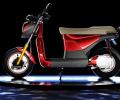
The government has taken a slew of steps to boost the sales of electric two-wheelers and three-wheelers under its Electric Mobility Promotion Scheme (EMPS) 2024, which includes allowing manufacturers to upload claims twice a month and gives them a 120-day window to submit it. The Rs 500-crore scheme -- which had replaced the flagship Faster Adoption and Manufacturing of Electric Vehicles (FAME) scheme-- comes to an end on July 31st.

As Modi's government embarks on its third term, apart from ensuring these schemes boost India's green mobility, addressing bottlenecks like battery swapping and meeting PLI deadlines are likely to be the government's major tasks.

The Ministry of Heavy Industries has approved 11 electric vehicle (EV) manufacturers, including Ather Energy, Bajaj Auto, Hero MotoCorp, Ola Electric, and Mahindra, to receive incentives under the recently introduced Electric Mobility Promotion Scheme (EMPS) 2024. "A total of 11 firms have been granted approval under the EMPS, with several more under consideration," informed a senior official of the ministry to Business Standard. The scheme aims to sustain the growth in EV sales, replacing the Faster Adoption and Manufacturing of Electric Vehicles - II (FAME-II) scheme.
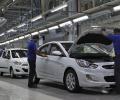
Automobile (auto) retail sales in India grew by an impressive 14 per cent in July compared to the same period last year, driven by a surge in the rural economy, good product availability, and product launches. While passenger vehicles (PVs) saw a 10 per cent increase during this period, inventory levels have surged to a historic high of 67-72 days in PVs, equating to Rs 73,000 crore worth of stock, according to the Federation of Automobile Dealers Associations (Fada). This poses a risk to dealer sustainability. Inventory levels in July 2023 were only 50-55 days, equating to a stock worth Rs 49,833 crore. In June 2024, inventory was between 62 and 67 days, with a stock value of Rs 60,000 crore.
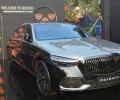
Elon Musk-led Tesla Inc is yet to express interest in India's flagship scheme to attract global investment in electric vehicle (EV) manufacturing, said Union Minister for Heavy Industries H D Kumaraswamy on Monday. In contrast, multiple global automobile giants -- such as Mercedes-Benz, koda Auto Volkswagen, Hyundai Motor, and Kia Motors -- are keen to participate, the minister noted.

Any industrial policy is only as good as how it is applied and the other reforms that support it. This was as true 40 years ago as it is now, points out Debashis Basu.
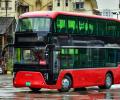
Seeking to enhance green mobility, the Union Cabinet on Wednesday approved the 'PM-eBus Sewa' scheme under which 10,000 electric buses will be provided to 169 cities under the public-private partnership (PPP) model.
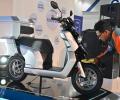
Seven electric two-wheeler companies have suffered a cumulative loss of over Rs 9,000 crore on account of unpaid dues and loss of market after their subsidies were stopped last year, the Society of Manufacturers of Electric Vehicles (SMEV) said on Wednesday. These companies have also been directed by the govt to refund the subsidies availed by them. The audit by SMEV's chartered accountants indicates the total, cumulative damages to affected companies could account for over Rs 9,000 crore on a conservative basis, it noted.
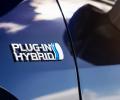
Plug-in hybrids have two engines and the electric part has a much larger battery than in the regular hybrids. Car companies, led by the Japanese, are pushing the Indian government to look at hybrids in the interim if it wants to reduce carbon emission.
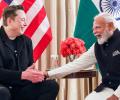
Starlink's application for offering satcom services in India had been held up for the company's inability to comply with mandatory ownership disclosure norms.
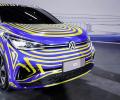
Ahead of the upcoming Union Budget, Society of Manufacturers of Electric Vehicles (SMEV) has asked Finance Minister Nirmala Sitharaman to either rejig the FAME II scheme or reintroduce FAME I, saying the programme meant to promote EVs in its second avatar has been able to achieve less than 10 per cent of its target. The Rs 10,000-crore FAME-II scheme which is to be implemented over a period of three years, came into effect from April 1, 2019. It is the expanded version of FAME India I (Faster Adoption and Manufacturing of (Hybrid) and Electric Vehicles (FAME) which was launched on April 1, 2015, with a total outlay of Rs 895 crore.

Arun Jaitley presented the Budget in Parliament on Saturday.

For the first time, the event will take place across three locations in Delhi: Bharat Mandapam at Pragati Maidan, Yashobhoomi Convention Centre at Dwarka, and India Expo Mart at Greater Noida.

'The scheme excludes tractors, light commercial vehicles, and medium and heavy commercial vehicles.'
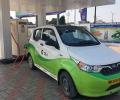
Signals received from the government in the past one year reflect a state of utter confusion, says Abhishek Tripathi.

While home-grown firms like Tata and Mahindra have been actively participating in the government's e-mobility mission, by launching electrified versions of their existing models, the global firms believe electric is not the best solution for a country where the primary source of power generation is coal, and where infrastructure is a big impediment.

Prime Minister Narendra Modi on Saturday inaugurated the 6th India Mobile Congress at Pragati Maidan in Delhi and launched 5G services. The 5G telecom services seek to provide seamless coverage, high data rate, low latency and highly reliable communications system. The three major telecom operators of the country demonstrated one use case each in front of the prime minister to show the potential of 5G technology in India.

Prime Minister Narendra Modi made a pitch for electing a strong and stable government in an uncertain world beset by geopolitical tensions as the Bharatiya Janata Party on Sunday released its manifesto, prioritising development and welfare while shunning populist measures and contentious issues like the National Register of Citizens (NRC).

The dealers operating in the space have jumped nearly three times over the past two years.

Finance Minister Nirmala Sitharaman presents her fourth Budget in Lok Sabha on Tuesday.

If the drop in sales over the past two years is anything to go by, India's dream of putting seven million electric vehicles on road by the end of this decade has come a cropper.

But it may come with a downside risk of further rise in prices of several products.

'Wherever in the world there is political instability, those countries are beset with severe crises today. But India is in a much better position than the rest of the world due to the decisions taken by my government in the national interest,' President Droupadi Murmu said in her address to both Houses of Parliament.
Finance Minister Nirmala Sitharaman on Friday hiked tax on petrol and diesel, raised import duty on gold, levied additional surcharge on super rich and brought a tax on high value cash withdrawals as she sought to spur growth with reduction in corporate tax and sops to housing sector, startups and electric vehicles.

While hybrids, CNG and biofuels found favour in 2018 among many carmakers including Maruti Suzuki, Mercedes-Benz, Toyota and Honda, others such as M&M and Tata Motors have shown full faith in electric vehicles.
'Nirmalaji's Budget announcements have long-term implications and are not backed by enough money when the short-term outlook looks bleak,' notes T N C Rajagopalan.

The manifesto was unveiled by Jayalalithaa at a public rally, in a departure from usual practice of release at party headquarters in Chennai.

Aircel executives said the company could offer value to big boys like Airtel or Jio as a low-end mobile services brand

GST will yield 'better value for money' for car buyers, increasing automobile industry demand, says Sandip Neogi.

Finance Minister Nirmala Sitharaman on Tuesday unveiled a Rs 39.45 lakh crore Budget with a view to fire up the key engines of the economy to sustain a world-beating recovery from the pandemic. This was Sitharaman's fourth Budget. While the taxpayers were left in the lurch, once again, was she able to cheer Corporate India?

Here's the full text of President Ram Nath Kovind's customary address to the joining sitting of Parliament on the first day of the budget session.
